
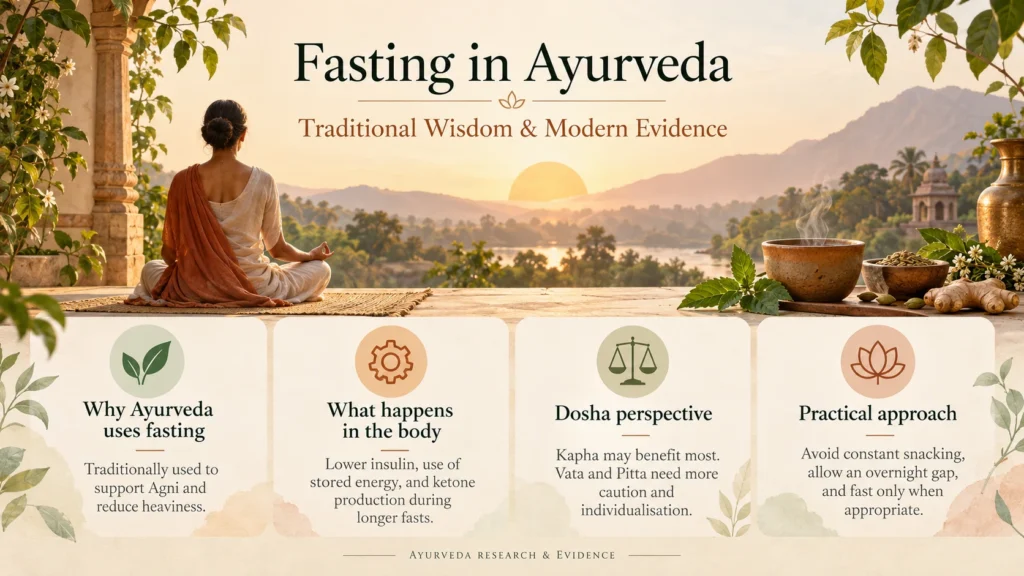
Fasting in Ayurveda is traditionally used to help restore digestive balance. Known as Upavasa, it forms part of Langhana, a therapeutic approach intended to reduce excess heaviness and support digestion.
Unlike modern fasting trends, Ayurveda does not recommend the same fasting routine for everyone. Constitution, digestive strength and physical condition determine whether fasting is appropriate.
🌿 Why Ayurveda Recommends Fasting
Ayurveda places considerable importance on Agni, the body’s digestive and transformative capacity.
When Agni is weakened, food may be poorly processed, contributing to what Ayurveda describes as Ama, a traditional concept associated with incomplete digestion and metabolic disturbance.
Fasting or temporarily eating lighter meals is traditionally used to reduce the burden on digestion and encourage the restoration of normal digestive function.
The Charaka Samhita describes Langhana as useful in conditions associated with excess heaviness and impaired digestion. However, it also recognises that excessive restriction can weaken the body.
⚙️ What Happens When We Fast?
Fasting in Ayurveda. After eating, insulin helps move glucose from the bloodstream into cells for energy or storage.
As time passes without food, insulin levels generally decline. The body increasingly uses stored glycogen and fatty acids for energy.
During longer fasting periods, the liver also produces ketones, which provide an alternative energy source.
These metabolic changes help explain why fasting may improve certain markers of metabolic health.
🔬 Fasting in Ayurveda. What Does the Research Say?
A systematic review and network meta-analysis of 41 randomised controlled trials involving 2,287 participants examined different forms of time-restricted eating.
Researchers found improvements in body weight, waist circumference, fasting glucose and insulin levels. Earlier eating windows generally produced better metabolic outcomes than later ones.
The study, Effects of Timing and Eating Duration of Time Restricted Eating on Metabolic Outcomes, is particularly relevant because it compares different eating schedules rather than treating all fasting methods as identical.
However, some benefits of fasting result from eating fewer calories overall, rather than fasting alone.
⚖️ Fasting and the Three Doshas
Ayurveda approaches fasting differently according to individual constitution. If you’re unfamiliar with these differences, my guide to the three doshas explains how Vata, Pitta and Kapha influence our individual characteristics.
Ayurveda recommends adjusting fasting practices according to individual constitution.
- Vata: Prolonged fasting may increase dryness, irregular digestion and feelings of weakness. Regular, nourishing meals are generally preferred.
- Pitta: Strong appetite and digestive heat can make extended fasting uncomfortable. Consistent meal timing and adequate nourishment are usually more suitable.
- Kapha: Short periods of fasting or lighter meals may traditionally be recommended to counter excessive heaviness and sluggishness.
These are traditional Ayurvedic principles, not clinically established predictors of fasting outcomes.
🪷 A Practical Ayurvedic Approach
From a practitioner perspective, fasting should never be about enduring hunger or pushing the body beyond its limits.
A comfortable overnight break between meals, avoiding unnecessary snacking and eating earlier in the evening may be sufficient for many healthy adults.
Fasting is not appropriate for everyone, particularly people who are underweight, pregnant, physically depleted or taking diabetes medication that can cause low blood sugar. Individual medical advice may be necessary.
The Ayurvedic principle is simple: eat according to your digestive capacity, nourish the body properly and use fasting only when appropriate.
Written by Stuart Kelly, CMA-registered practitioner, qualified in Ayurvedic Herbalism and Nutrition.