
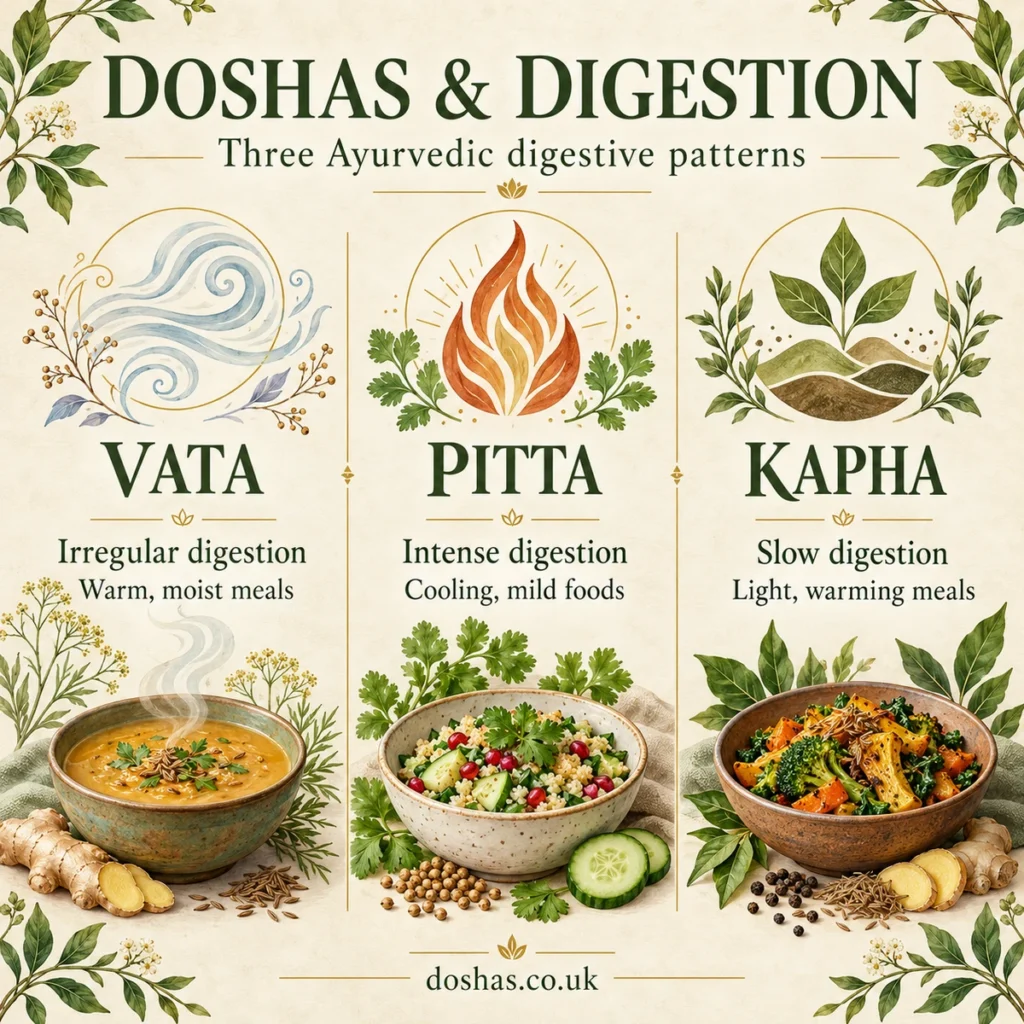
Doshas and digestion are closely connected in Ayurveda. The traditional system recognises that people differ in their appetite, digestive comfort and response to certain foods. These differences are understood through the three doshas: Vata, Pitta and Kapha.
Each dosha is associated with a particular digestive pattern. Understanding these patterns helps explain why Ayurveda recommends different foods, cooking methods and eating habits for different people.
🔥 Agni: The Ayurvedic Understanding of Digestion
To understand doshas and digestion, we first need to look at Agni, commonly described as digestive fire. It represents the body’s ability to break down food, assimilate nourishment and eliminate waste.
Agni is not simply stomach acid or digestive enzymes. It is a broader traditional concept describing digestive function and the transformation of food into nourishment.
Ayurveda recognises four main digestive states:
- Sama Agni: Balanced, consistent digestion.
- Vishama Agni: Irregular digestion associated with Vata.
- Tikshna Agni: Sharp, intense digestion associated with Pitta.
- Manda Agni: Slow, sluggish digestion associated with Kapha.
The aim of Ayurvedic dietary practice is to encourage Sama Agni, regardless of a person’s natural constitution.
🌬️ Vata Digestion: Irregular and Unpredictable
The relationship between doshas and digestion becomes apparent when we look at Vata dosha, which is associated with air and space, bringing qualities of movement, dryness and change.
Its digestive pattern, Vishama Agni, is traditionally described as variable. Hunger may fluctuate, while bloating, gas and constipation are common signs associated with disturbed Vata.
Ayurveda recommends warm, moist, freshly cooked foods because their qualities oppose Vata’s natural dryness and coldness.
Traditional recommendations include:
- Warm soups, stews and cooked vegetables.
- Regular meals at consistent times.
- Adequate moisture and moderate amounts of healthy fats.
- Gentle digestive spices such as cumin, fennel and fresh ginger.
A bowl of warm vegetable soup is traditionally considered more suitable for aggravated Vata than a large, cold, raw salad.
🔥 Pitta Digestion: Strong and Intense
When considering doshas and digestion, Pitta dosha represents a different pattern. Associated with fire and water, its qualities include heat, sharpness and intensity.
Pitta’s digestive pattern, Tikshna Agni, is traditionally characterised by strong hunger and rapid digestion.
When Pitta becomes aggravated, Ayurveda associates it with excessive digestive heat, burning sensations, acidity and loose stools.
Because Pitta already possesses heating qualities, Ayurveda generally favours foods that are cooling without weakening digestion.
Traditional recommendations include:
- Moderately spiced meals.
- Naturally sweet foods such as ripe pears and cooked grains.
- Cooling herbs, including coriander and fennel.
- Reducing excessive chilli, sour foods and heavily fried meals.
The intention is to moderate excessive heat while maintaining a comfortable, consistent appetite.
🌿 Kapha Digestion: Slow and Heavy
The third relationship between doshas and digestion concerns Kapha dosha, associated with earth and water. Its qualities are heavy, cool, moist and stable.
Its digestive pattern, Manda Agni, is traditionally described as slow. Appetite may be less pronounced, with feelings of heaviness or sluggishness after substantial meals.
Ayurveda recommends lighter, warming foods to counterbalance these qualities.
Traditional recommendations include:
- Lightly cooked vegetables and warming soups.
- Moderate portions rather than heavy meals.
- Warming spices such as ginger, black pepper and cumin.
- Reducing excessive oily, sweet and heavy foods.
A lightly spiced vegetable dish is traditionally considered more suitable for aggravated Kapha than a large, rich meal.
🍲 Why Food Preparation Matters
The connection between doshas and digestion extends beyond choosing particular ingredients. Ayurveda also considers how food is prepared.
Take an apple, for example.
A raw apple has a crisp, comparatively drying quality. Gently stewing it with water softens its texture and introduces warmth and moisture, making it traditionally more suitable for Vata.
Modern food science also recognises that cooking changes how food behaves during digestion.
A 2024 review of resistant starch and food processing explains how heating starch with water disrupts its structure, making it more accessible to digestive enzymes. Cooling certain cooked starches can then increase resistant starch, which is less readily digested in the small intestine.
This demonstrates why preparation matters nutritionally, although it does not establish the Ayurvedic dosha classifications.
🕰️ Does Meal Timing Influence Digestion?
Meal timing is another practical consideration when studying doshas and digestion. Ayurveda traditionally encourages regular eating patterns and recommends allowing sufficient time between meals.
Modern research offers useful insight into why meal timing matters.
A 2020 review examining circadian rhythms and gastrointestinal function describes how digestive enzyme activity, nutrient absorption and gut hormone secretion vary across the daily biological cycle.
These processes help coordinate digestion with periods of eating and activity. Disrupted eating schedules may interfere with this coordination.
The research supports the importance of biological timing in digestion, independently of traditional Ayurvedic theory.
🌱 Understanding Your Digestive Balance
Understanding doshas and digestion provides a traditional framework for recognising individual digestive patterns rather than applying identical dietary rules to everyone.
Ayurveda encourages us to consider appetite, food preparation, meal timing and how comfortably food is digested.
A person’s digestive state can also change with their habits, environment and circumstances. Their natural dosha does not mean their digestion must always follow one pattern.
Persistent abdominal pain, reflux, constipation or diarrhoea should not automatically be attributed to a dosha imbalance. These symptoms may have medical causes that require investigation.
The Ayurvedic principle is straightforward: Choose foods and eating habits that encourage comfortable, consistent digestion while respecting your individual constitution.