
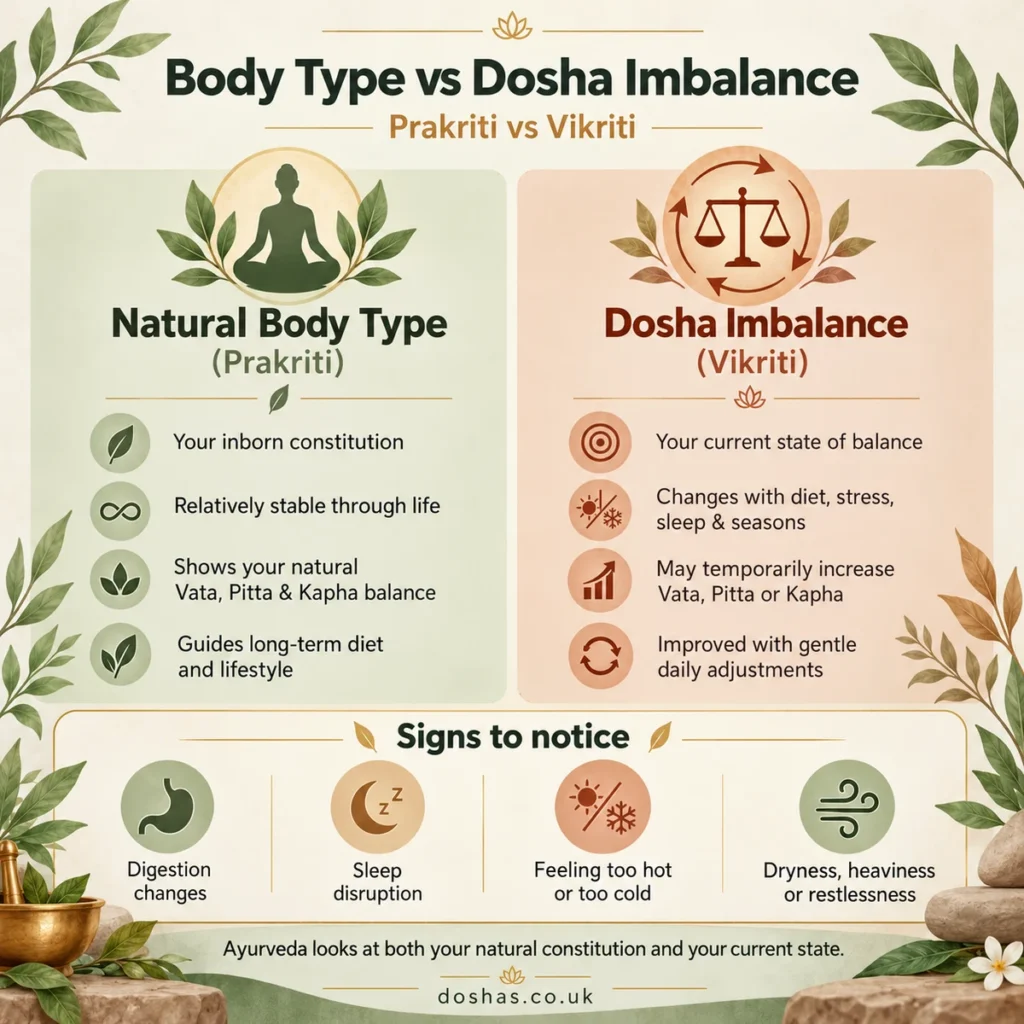
A dosha imbalance is not the same as your natural Ayurvedic body type. Understanding this difference is fundamental to Ayurveda because it helps explain why your dietary and lifestyle needs can change over time.
Ayurveda distinguishes between your natural constitution, known as Prakriti, and your current state of balance, known as Vikriti.
🌿 Understanding Your Natural Constitution
Ayurveda recognises three doshas: Vata, Pitta and Kapha. Everyone possesses all three, but their proportions and characteristics differ.
- Vata governs movement and is associated with dryness, coldness and lightness.
- Pitta governs transformation, including digestion, and is associated with heat and intensity.
- Kapha provides structure, stability and lubrication and is associated with heaviness, moisture and coolness.
Your natural constitution is traditionally considered established at conception and relatively stable throughout life.
A dosha imbalance does not mean your constitution has permanently changed. It means certain qualities have become more pronounced than your natural balance would suggest.
⚖️ What Causes a Dosha Imbalance?
In Ayurveda, Vikriti describes changes influenced by diet, daily habits, emotional strain, environmental conditions and seasonal variations.
For example, someone with a naturally Pitta-dominant constitution may develop increased Vata characteristics following prolonged stress, irregular meals and insufficient sleep.
Recognising a dosha imbalance involves observing changes from your usual physical and mental patterns.
Traditional Ayurvedic signs of aggravated Vata include:
- Dry skin and constipation
- Restlessness and disturbed sleep
- Irregular appetite
- Feeling unusually cold
These signs are not exclusive to Vata. Persistent symptoms may have medical causes requiring investigation.
🍲 How Ayurveda Restores A Dosha Imbalance
Ayurveda works with the principle that opposing qualities help restore equilibrium.
When a dosha imbalance involves increased Vata, traditionally described as cold, dry and mobile, warm and moist foods are generally preferred.
A freshly cooked vegetable soup is a practical example. Cooking softens plant fibres and breaks down some cell-wall structures, making vegetables easier to chew and potentially easier to digest. The liquid also contributes to hydration.
A dosha imbalance associated with excessive Pitta calls for a different approach. Ayurveda traditionally recommends less heating foods, moderate spices and regular meals.
For aggravated Kapha, lighter meals, warming spices and regular physical movement are commonly advised.
These recommendations follow Ayurvedic principles rather than representing clinically proven treatments for specific disorders.
🔬 What Does Research Say?
Modern researchers have investigated whether Ayurvedic constitutional classifications can be assessed consistently.
A 2025 review published in Frontiers in Medicine examined 94 studies involving 64 different Prakriti assessment tools.
Only 20 tools had undergone any form of validation, and just two met seven of the nine recommended assessment criteria.
The findings suggest that constitutional assessment remains insufficiently standardised. The review examined methods of identifying Prakriti, not whether Ayurvedic treatments correct imbalances.
This distinction matters because traditional Ayurvedic observations and modern clinical measurements are not interchangeable.
🧘 Recognising Changes in Your Own Body
A dosha imbalance may develop gradually, particularly when eating habits, sleep patterns or daily routines become disrupted.
Rather than focusing on an isolated symptom, Ayurveda considers the whole pattern.
Think about your usual appetite, digestion, sleep and response to temperature. Then consider what has changed recently.
Someone who normally sleeps soundly but becomes restless during a stressful period may be showing temporary changes rather than characteristics of their natural constitution.
Keeping regular meals, maintaining consistent sleep habits and choosing foods appropriate to your digestion are sensible starting points.
🌱 Your Constitution Is the Starting Point
Understanding a dosha imbalance alongside your natural constitution allows for a more individual approach to Ayurvedic diet and lifestyle.
Prakriti describes your underlying tendencies. Vikriti describes your present condition.
The purpose is not to label yourself permanently as Vata, Pitta or Kapha, but to recognise how your needs may change.
You can explore your natural tendencies with our free Ayurvedic Dosha Quiz.
Written by Stuart Kelly, CMA-registered practitioner, qualified in Ayurvedic Herbalism and Nutrition.