
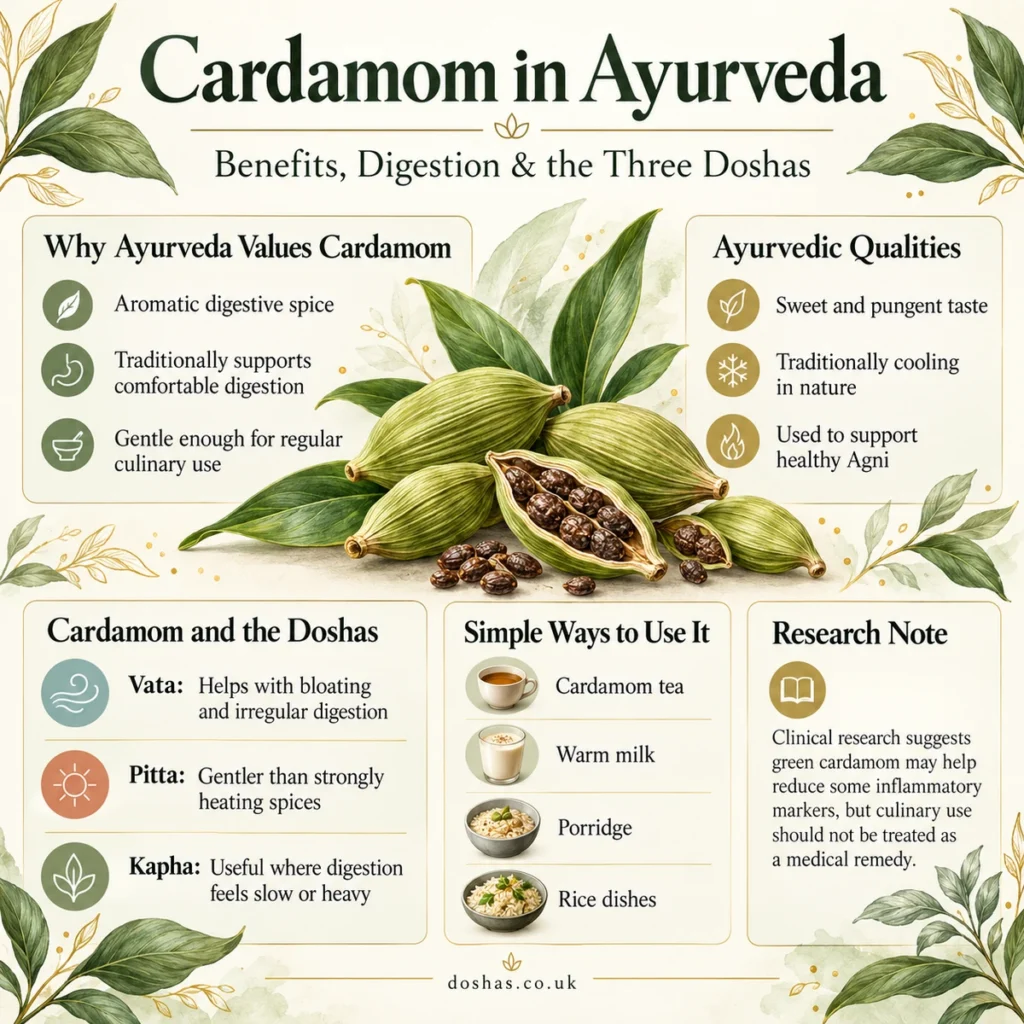
Cardamom in Ayurveda has a long history as a digestive spice, valued for its aromatic seeds and gentle action on the stomach. Known traditionally as Ela, green cardamom (Elettaria cardamomum) is used in cooking, herbal preparations and digestive teas.
Unlike stronger spices such as black pepper or dried ginger, cardamom is generally considered suitable for all three doshas when used in moderation.
🌿 Why Cardamom Is Valued in Ayurveda
Cardamom has a distinctive combination of sweet and pungent tastes, with a traditionally cooling energy and sweet post-digestive effect.
In Ayurvedic practice, these qualities make it particularly useful where digestion feels sluggish, food sits heavily in the stomach or uncomfortable gas develops after eating.
Cardamom in Ayurveda is also associated with Agni, the digestive fire responsible for transforming food into nourishment. Rather than producing intense heat, its aromatic qualities are traditionally used to encourage a more comfortable digestive process.
🍽️ Cardamom for Digestion and Bloating
One of the best-known traditional cardamom benefits is its use for digestive discomfort.
Cardamom contains volatile aromatic compounds, particularly 1,8-cineole and alpha-terpinyl acetate. These contribute to its distinctive fragrance and have attracted research interest for their biological activity.
When we eat, the digestive tract relies on coordinated muscular contractions to move food and gas along. Disruption to this movement can contribute to bloating and abdominal discomfort.
Cardamom has traditionally been used as a carminative, meaning a substance taken to help relieve digestive gas. Laboratory research has investigated the effects of its extracts on smooth muscle, although convincing human trials demonstrating relief from bloating remain limited.
This traditional use explains why cardamom often appears in Ayurvedic digestive preparations alongside fennel, coriander and ginger.
⚖️ Cardamom and the Three Doshas
Understanding cardamom and doshas helps explain why Ayurveda uses this spice across different constitutional types.
Vata Dosha
Vata Dosha is associated with movement, dryness and coldness. When disturbed, digestion may become irregular, with bloating and trapped gas.
Cardamom’s aromatic and carminative qualities are traditionally used to help settle this discomfort. Adding it to warm, moist foods is particularly appropriate for Vata.
Pitta Dosha
Pitta Dosha governs heat and transformation, including the traditional concept of digestive metabolism.
Green cardamom is generally considered gentler than strongly heating spices. Its traditionally cooling quality makes modest culinary amounts suitable for Pitta, particularly in mild dishes and warm milk.
Kapha Dosha
Kapha Dosha is associated with heaviness, moisture and stability. An imbalance may be expressed as slow, heavy digestion.
Cardamom’s light, pungent and aromatic qualities are traditionally used to counter this sluggishness. It pairs well with ginger in warming drinks and lightly spiced meals.
🔬 What Does Modern Research Say?
Although cardamom in Ayurveda is primarily valued for digestion, modern researchers have also investigated its effects on inflammation and cardiovascular health.
A 2024 systematic review and meta-analysis published in Food Science & Nutrition examined eight randomised clinical trials involving adults.
Researchers found that green cardamom supplementation was associated with reductions in several inflammatory markers, including C-reactive protein, interleukin-6 and TNF-alpha.
These markers are involved in inflammatory signalling. For example, interleukin-6 is a signalling protein produced by immune and other cells that helps coordinate the body’s inflammatory response.
The review also reported small reductions in systolic and diastolic blood pressure.
However, the researchers acknowledged limitations in the available studies. These findings do not establish that ordinary culinary amounts produce the same effects, or that cardamom treats inflammatory or cardiovascular disease.
☕ How to Use Green Cardamom
One of the simplest ways to enjoy cardamom is to use the whole green pods rather than relying on older, pre-ground powder.
The seeds contain aromatic oils that gradually diminish after grinding. Crushing them immediately before use helps preserve their characteristic flavour.
Try these straightforward preparations:
- Cardamom tea: Lightly crush two green pods and steep in hot water for 5–10 minutes.
- Warm milk: Add a crushed pod to gently heated milk or a plant-based alternative.
- Porridge: Add freshly ground cardamom with oats and cooked fruit.
- Rice dishes: Include a whole pod during cooking and remove before serving.
Cardamom tea benefits are largely based on traditional use. It provides a pleasant way to include the spice in your diet, but it should not be regarded as a treatment for digestive disease.
⚠️ Safety and Practical Considerations
Green cardamom is generally well tolerated in normal food quantities.
Concentrated extracts and supplements are different from culinary use. Anyone taking medication for blood pressure or managing a medical condition should seek professional advice before using medicinal doses.
Persistent bloating, abdominal pain or unexplained digestive changes should be investigated rather than repeatedly treated with herbs.
🌱 A Gentle Spice Worth Keeping in the Kitchen
Cardamom in Ayurveda demonstrates how traditional herbal practice often begins with familiar everyday ingredients.
Its distinctive flavour, traditional digestive applications and compatibility with different doshas make green cardamom a useful addition to regular cooking.
Used sensibly, it offers more than fragrance without needing to be treated as a cure for anything.